Currency Is What You Spend. Money Is What You Keep.
The difference between money and currency is older than the words we use today — and once you see it, you stop reading the world the same way.
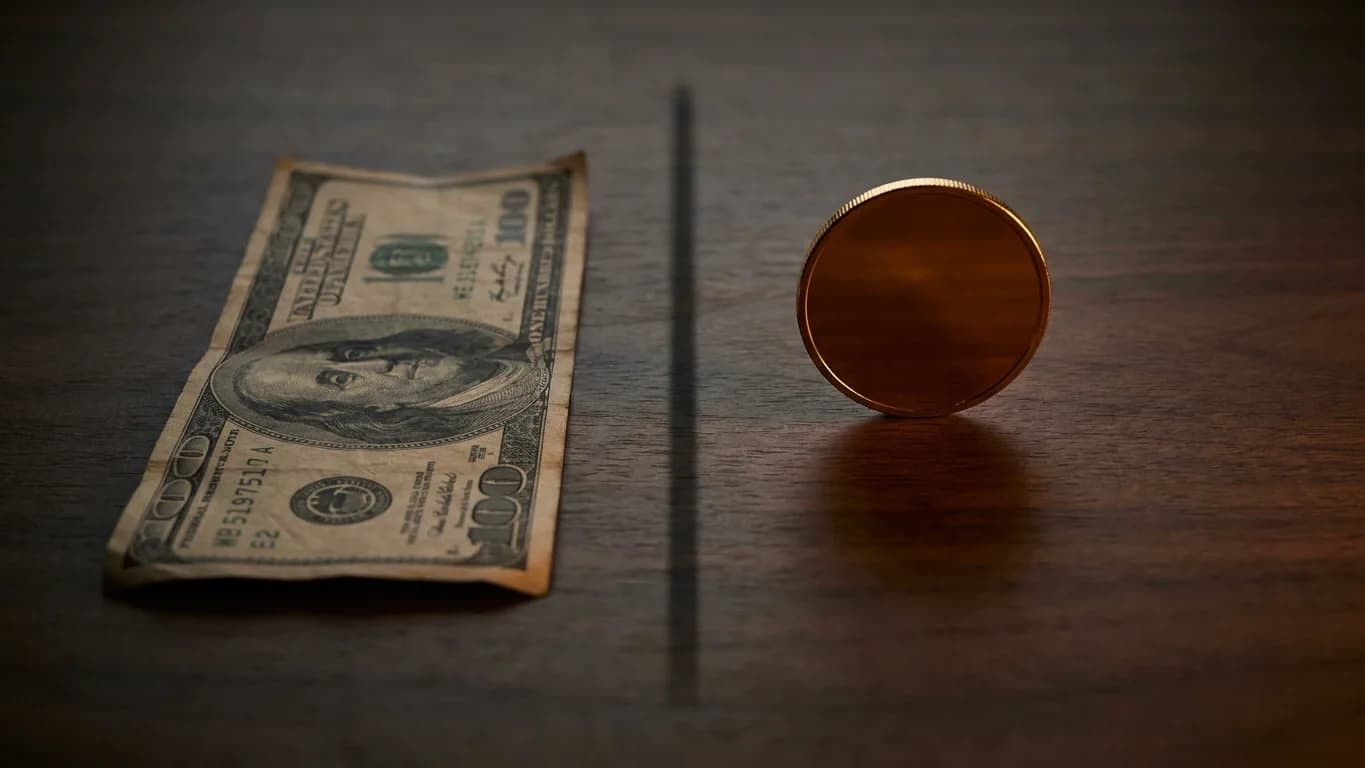
We toss “money” and “currency” around like synonyms. They aren't. The distinction has been understood for thousands of years, and it's one of those ideas that, once you see it, makes a quiet shift in how you read the news, look at your savings, and decide what to do with what you've earned.
It starts with a question that sounds simple and isn't: what does something actually have to be to work as money?
What Money Has to Be
Aristotle answered this in the fourth century BC. He didn't have a central bank or a smartphone, but his list has held up. Money has to move easily from hand to hand. It has to last without rotting or rusting. It has to divide cleanly into smaller pieces. It has to be the same wherever you find it, so that one unit is interchangeable with the next. It has to be hard to produce on a whim. And — the one we tend to forget — it has to actually hold its worth across time.
Almost everything we trade fails at least one of these. A loaf of bread is a poor candidate: it goes stale, it doesn't divide neatly, you can bake more by tomorrow morning. A diamond is closer — it lasts, it's portable, it's rare — but no two stones are alike, and that kills the requirement that one unit be a perfect swap for another. The dollar in your left pocket and the dollar in your right have to be the same dollar. Otherwise the whole thing falls apart.
So what about the paper in your wallet? It checks most of the boxes. You can carry it, spend it, price things with it, swap one twenty for another twenty. That's why it functions day to day. That's why we use it. That's why every economy on Earth runs on something like it.
But it fails on the last two properties, and those are the ones that matter most.
Currency can be printed. Money cannot be printed. That's not a slogan; it's a structural fact — and it's the entire reason these two words point at different things.
The Line Between Them
A central bank can decide, on an ordinary Tuesday afternoon, to add trillions of units to the supply. No one needs permission. No physical work is required. The decision itself is the act of creation. Whatever's already in your account quietly becomes a smaller slice of the same pie.
And because of that — because more of it can always be made — currency leaks value. Slowly in calm years, quickly in chaotic ones, but always in the same direction. The hundred-dollar bill from twenty years ago bought meaningfully more than it buys today. The mechanism is so steady we've given it a name: inflation. We've gotten so used to it that we treat it as weather. It isn't weather. It's a feature of how the system was designed to work.
This is the line that separates the two ideas. Currency does the work of moving value through an economy. Money does the work of preserving value across time. Both are useful. They are not the same job.
Side by Side
The usual comparison you'll see lays it out in two columns. Shared properties on top — medium of exchange, unit of account, portable, fungible — and the differences underneath. It's a useful starting point.
| Property | Currency (paper / digital) | Money (physical gold / silver) |
|---|---|---|
| Portable | Yes | Yes |
| Divisible | Yes | Yes |
| Fungible | Yes | Yes |
| Durable | Wears out; replaced on a schedule | Outlasts the civilizations that issued it |
| Limited supply | Expandable by decision — no natural ceiling | Grows ~1.5–2% per year, bounded by mining cost |
| Store of value across time | Loses purchasing power; designed to | Holds purchasing power across centuries |
| Counterparty risk | Depends on issuer / bank honoring the promise | None — it is the thing itself |
Note: “Durable” is often listed as a property both share. They share it in the loose sense that both last long enough to use. They do not share it in the longer sense.
That comparison is mostly right. But two things deserve more honest treatment than they usually get.
The first is durability. A paper note physically wears out in a few years and gets replaced. A digital balance lasts only as long as the institution holding it. Gold pulled from the ground three thousand years ago — actual artifacts, in actual museums — looks the same today as it did when a Bronze Age craftsman shaped it. That's a different category of durable. Currency lasts long enough to use. Money lasts long enough to outlive every civilization that ever held it.
The second is something the standard comparison usually leaves out: counterparty risk. When you hold currency in a bank, what you actually hold is a promise. The bank owes you a balance. The state guarantees the currency. Both promises require the institution behind them to still be functioning and honoring the deal. Most of the time, that's a safe assumption. Some of the time, in some places, it isn't — and when it isn't, the depositors who learn that lesson learn it all at once. Physical money owes you nothing because it isn't a promise. It's the thing itself.
Where Gold Fits
Gold is the answer humans have kept landing on. Not because of culture or nostalgia, but because the properties line up.
Gold doesn't rust, doesn't tarnish, doesn't react with air or water. It's the same element today that it was when it formed inside a dying star — element 79. You cannot synthesize it cheaply; you have to find it, dig it up, and refine it. That work caps the supply. Every year, the total above-ground stock of gold grows by roughly 1.5 to 2 percent — the cost of getting more of it out of the ground sets a hard ceiling on how fast the float can expand. Compare that to how fast currency supplies grow during a normal year, never mind a crisis year, and the difference is the entire argument.
Gold is dense — a meaningful amount fits in a small space. It's perfectly fungible — a gram of fine gold is identical to any other gram of fine gold, regardless of which mint or refinery it passed through. It's divisible into grams, ounces, kilos, anywhere in between. It's portable in any quantity an individual is likely to need. It's recognized as valuable in every culture that has ever encountered it, going back further than any written record. And it carries no counterparty — the metal in your hand owes you nothing because it doesn't need to.
This is what people mean when they say gold is money. They aren't being mystical. They're describing the properties of money and pointing out that gold has all of them. The currency in your wallet has four of the six. That's not a small gap. That's the distinction between a tool built to move value and a thing that is value.
So What Do You Do With This?
Not much, in the short term. You still need currency. You can't pay rent in gold grams, can't tip a server in silver, can't buy groceries with bullion. Currency is the tool for transacting and it does that job well enough that we'd all be poorer without it. The corner store doesn't take coins minted in the 1800s, and that's fine. (We've written separately about why most attempts to turn gold back into everyday spending money keep failing — and why that doesn't actually matter for your stack.)
But the further out you look, the more the distinction matters. Savings held entirely in currency are exposed to the one thing currency cannot resist: the slow expansion of its own supply. The bill that filled a tank of gas a generation ago doesn't fill it now. Twenty years from now, the same math will hold, in the same direction. That's not pessimism — that's the design.
Money, the historical kind, is what you reach for when you want to hold value rather than move it. Not because the price won't fluctuate; it will. But because the supply cannot be expanded by decision, and three thousand years of human history suggest that's the property that matters when you're thinking in decades rather than days.
The slide-deck version of this idea is a two-column table with checkmarks. The honest version is shorter: currency is what you spend, money is what you keep. Both belong in a life. Knowing which is which is the first step to using each one well.
Related reading: Stop Trying to Spend Your Gold — on why “gold as everyday currency” projects keep failing, and why that doesn't actually matter for what you hold. Debasement vs. Devaluation — two historical case studies of currencies losing their value through very different mechanisms. And The Tunnel You're Already Running Through — on inflation, retirement, and what happens when the unit of account quietly erodes over decades.
Know Which Side of the Line You're On
BullionCoin Network is built for people who think about this distinction — who track what they actually hold in grams and ounces, not just the number on a bank statement. Log every coin and bar in your stack, watch its real value across currencies, and see exactly where your purchasing power lives.
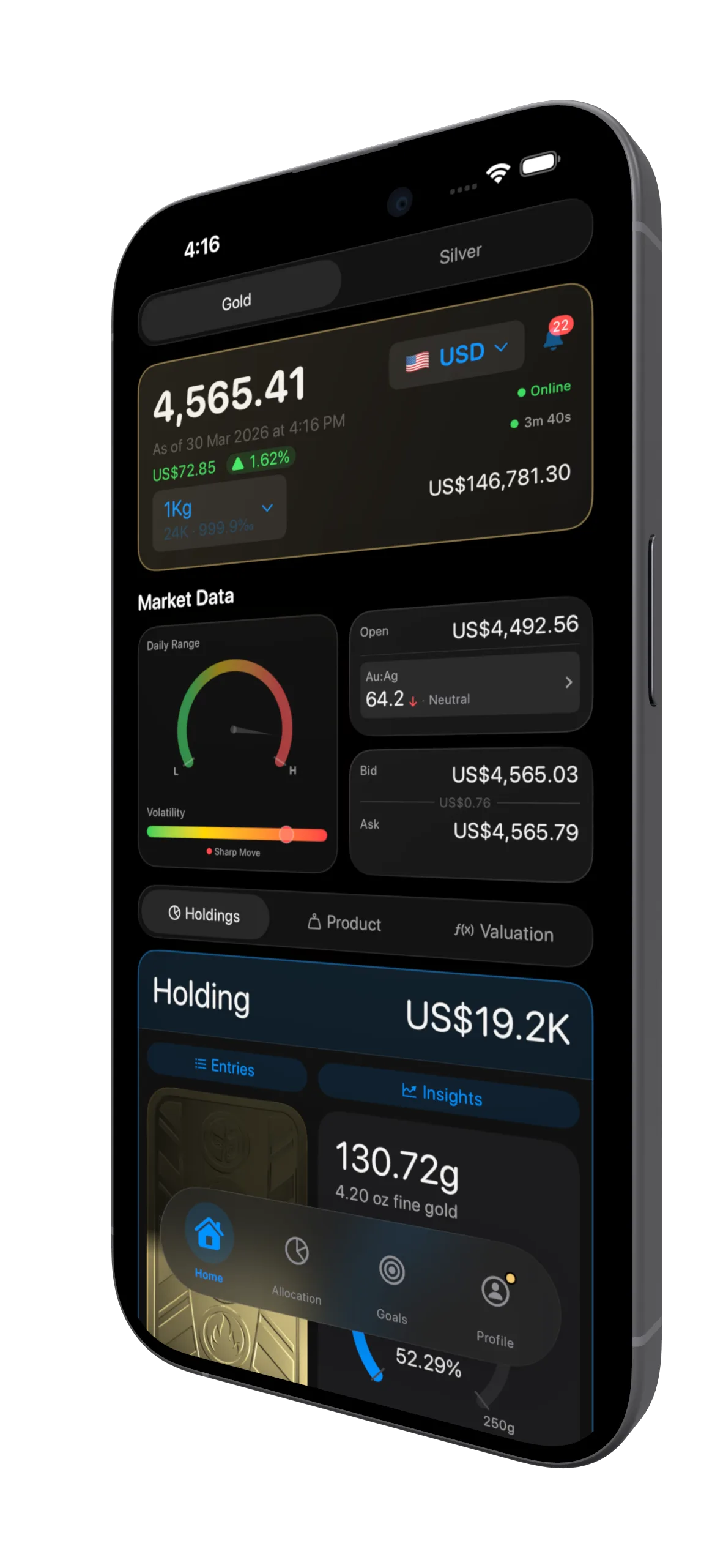
Portfolio Overview
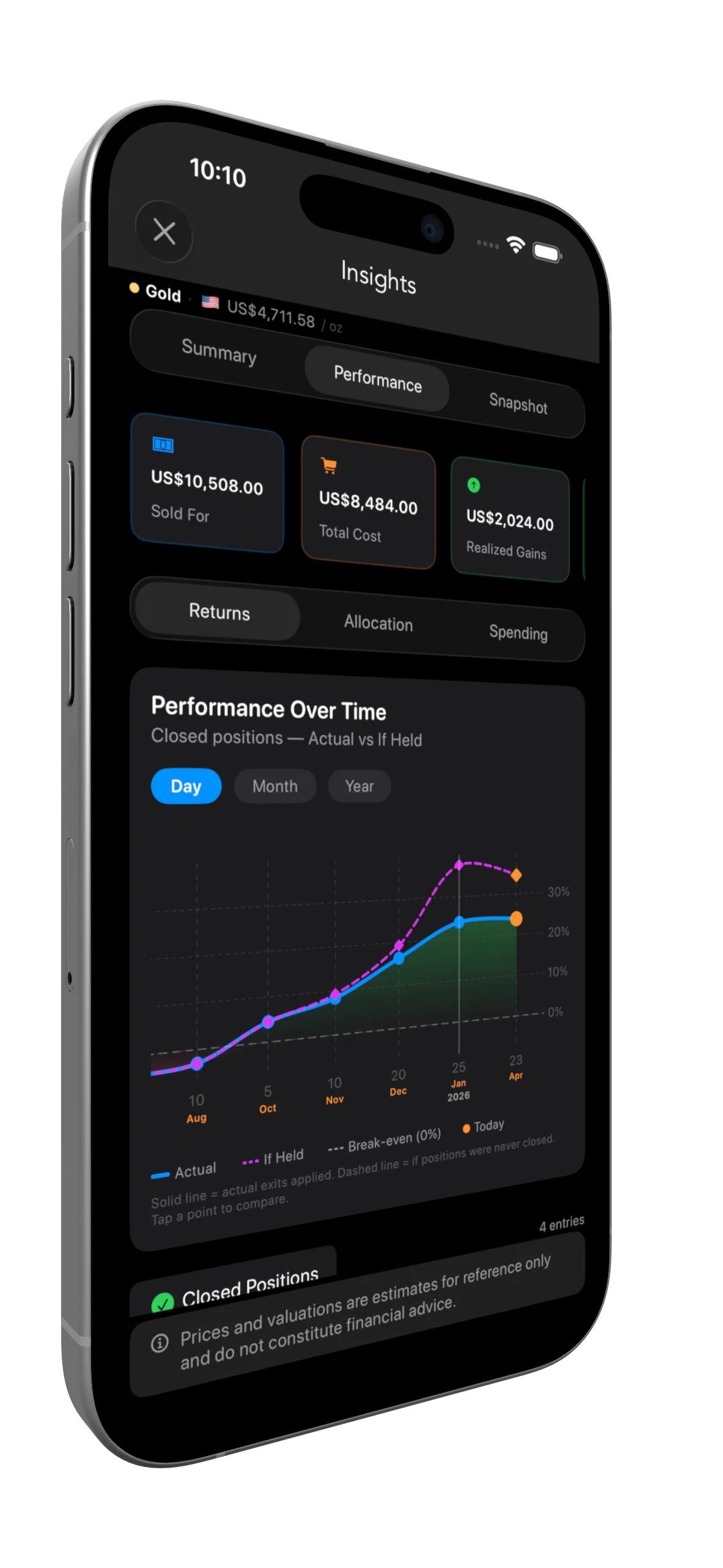
Portfolio Performance
Disclaimer: This article is educational content about monetary history and personal finance. It is not financial, investment, legal, or tax advice, and it does not constitute a recommendation to buy, sell, or hold any asset, currency, or security. Past performance of any asset, including gold, is not a guarantee of future results. Figures cited — including the annual growth rate of above-ground gold supply — are drawn from publicly available industry sources believed to be reliable at the time of writing and may differ across sources or be revised as new data becomes available. The framing of historical thinkers and economic concepts is a summary intended for a general audience and not a comprehensive academic treatment. BullionCoin Network takes no political position regarding any government, central bank, or currency referenced in this article. Always do your own research and consult qualified professionals before making financial decisions.