Stop Trying to Spend Your Gold.
Every cycle, someone promises to turn gold into everyday money. Here's why that keeps failing — and why it doesn't matter.

There's a pitch that comes around every cycle. Some fintech launches a card, an app, or a token and says: now you can spend your gold at the coffee shop.
And every time, the stacking community splits. One side gets excited — finally, gold as real money again. The other side says what most of us quietly think: why would I spend an appreciating asset on coffee?
That gut reaction isn't just common sense. It's backed by centuries of monetary theory — and understanding why might be the most important thing you learn about gold this year.
You Already Know Gresham's Law
There's an old economic principle called Gresham's Law: bad money drives out good money. Sounds academic. But you've already lived it.
Think about it. You're holding $100 in cash and $100 in gold. A bill comes due. Which one do you reach for?
Cash. Every time.
Not because you love fiat — but because you instinctively understand that the gold is better money. It holds value. The cash is losing purchasing power while it sits in your wallet. So you spend the weaker currency and keep the stronger one.
This isn't a character flaw. It's rational behavior, and it's been repeating for as long as two forms of money have existed side by side. During the classical Gold Standard (1870–1914), people rarely spent gold coins directly. Most daily transactions used banknotes or credit instruments. Gold sat in bank reserves and vaults — functioning as the foundation of the monetary system, not the medium people handed across counters.
The Coffee Problem
Let's make this concrete.
Say gold is at $3,000/oz and you buy a $5 coffee with roughly 0.0017 oz of gold. Fair enough. But six months later gold is at $3,500. That coffee retroactively cost you $5.83 in purchasing power.
Doesn't sound like much? Now multiply that across every daily transaction for a year. Every sandwich, every gas fill-up, every subscription — all silently costing you more than face value because you spent an asset that was appreciating underneath you.
Gold went from roughly $270/oz in 2000 to over $3,000/oz by early 2026. Anyone who spent gold consistently over that period effectively paid a massive premium on every purchase compared to spending dollars.
Stackers understand this intuitively. It's the same reason you don't crack open a sealed tube of Eagles to pay rent.
Tokenization Solves the Wrong Problem
This is where digital gold projects run into a wall — all of them.
They've solved real technical problems. Storage, divisibility, transfer speed — all genuinely improved. You can now move fractional gold ownership across borders in seconds. That's impressive engineering.
But engineering doesn't change economics.
The reason people don't spend gold isn't because it's hard to divide or slow to transfer. It's because gold's entire value proposition is that you don't spend it. You hold it. You save in it. You let it do its job as a long-term store of purchasing power.
Making gold easier to spend is like making a fire extinguisher easier to drink from. You've solved a technical challenge that nobody actually needed solved, because that's not what the thing is for.
So Why Do Platforms Push “Spend Your Gold”?
Follow the incentives.
Every time you swipe a gold-backed card, the platform earns a transaction fee. More spending volume means more revenue. So of course the marketing says “use gold as everyday money” — that's what generates fees.
But the economically honest positioning would be different: digital gold as programmable reserve wealth. Not spending money. Savings infrastructure.
The platforms that figure this out first will win long-term trust in the stacking community. The ones that keep pushing the “spend your gold” narrative will keep wondering why adoption stalls after the initial hype cycle.
Where Digital Gold Actually Makes Sense
None of this means tokenized gold is pointless. It just means the real use cases aren't at the checkout counter.
- Collateral. Gold-backed tokens as collateral in lending and financial systems — this is where institutional capital is already looking.
- Settlement. Cross-border settlement between institutions using tokenized gold instead of correspondent banking. Faster, cheaper, and denominated in a neutral asset.
- Savings layer. A global, accessible savings layer where anyone can hold gold without dealing with vaults, shipping, or storage fees. This is the one that matters most for regular stackers.
The direction is clear: gold's digital future is about reserve and savings infrastructure, not replacing your debit card.
What This Means for Your Stack
If you're stacking physical metal — coins, bars, rounds — you're treating gold the way monetary history suggests it functions best: as long-term savings that sit outside the financial system. Whether that approach is right for you depends on your personal circumstances and goals.
The urge to “do something” with your gold, to make it work harder, to spend it — that's fiat thinking applied to a hard asset. Gold doesn't need to earn yield or generate transactions. Its job is to be there when everything else isn't.
The bottom line: for those who view gold as a long-term reserve asset, the case for simply holding is rooted in centuries of monetary history. Gold doesn't need to earn yield or generate transactions — its role, for many stackers, is simply to be there.
This is Part 1 of a two-part series. In Part 2, we'll break down the “three-layer money system” — a framework that explains how fiat currencies, digital payment networks, and hard assets like gold are likely to coexist going forward, and what that means for how you think about your stack.
Track Your Stack. Don't Spend It.
BullionCoin Network helps you track your physical gold and silver, monitor real-time spot prices, and see your portfolio's performance over time — so you always know what your stack is worth without ever needing to sell a gram.
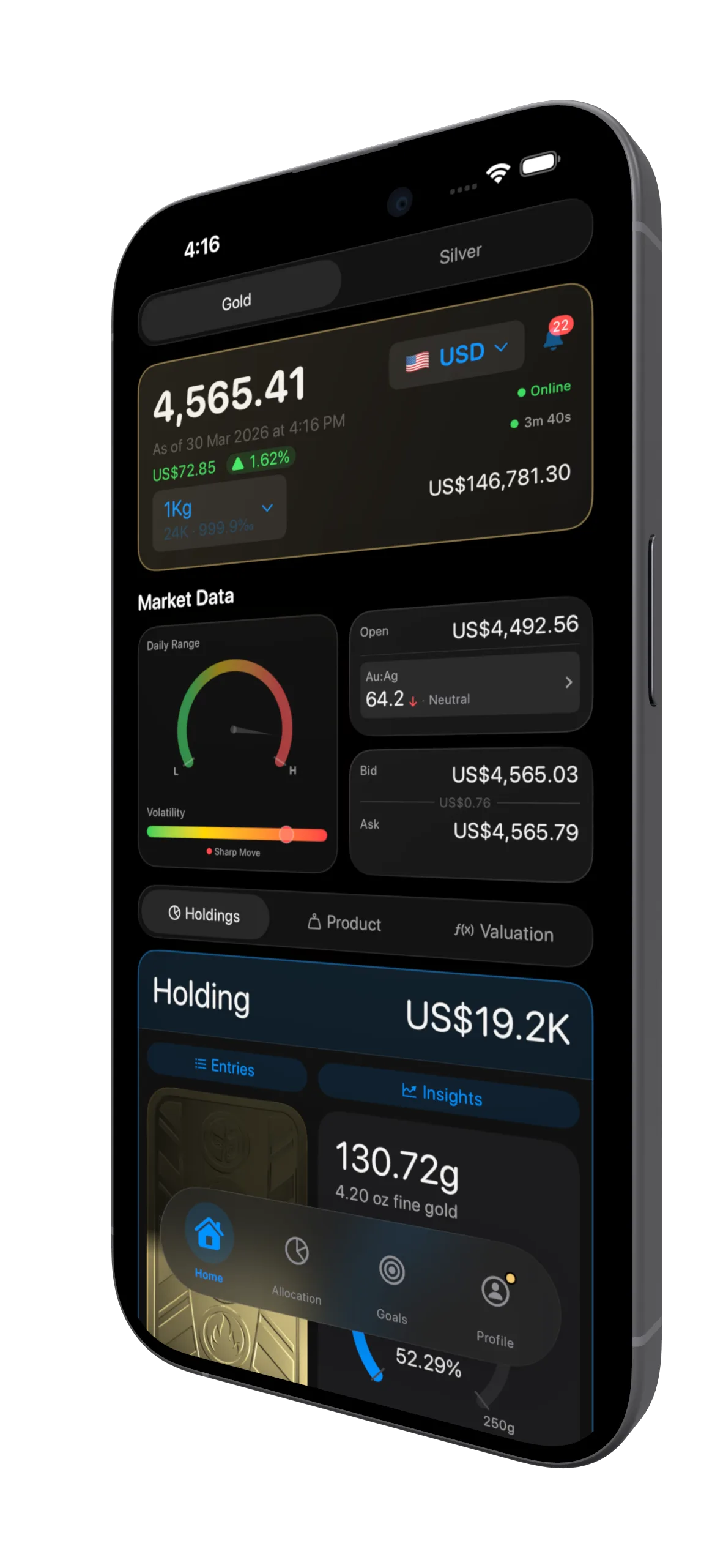
Portfolio Overview
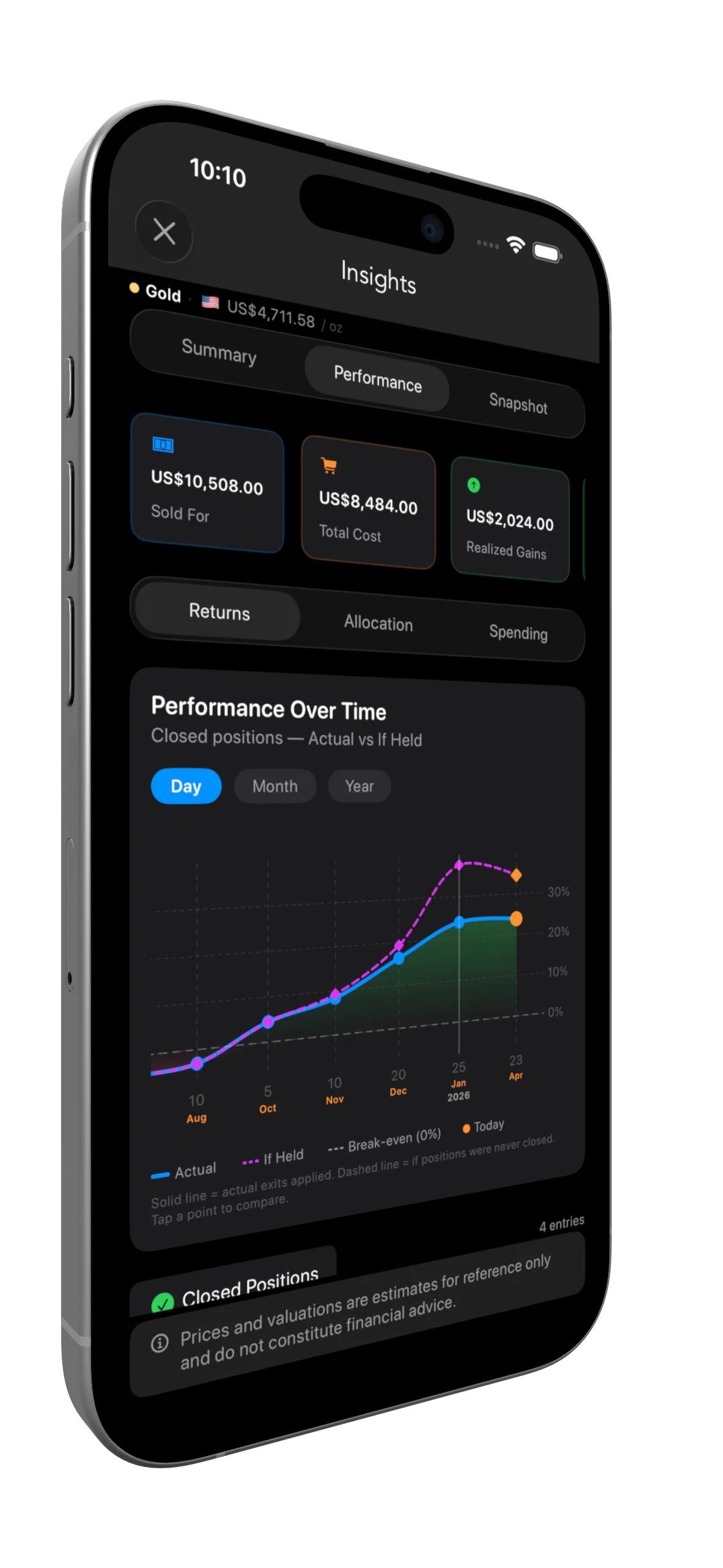
Portfolio Performance