Debasement vs. Devaluation: How Two Liras Lost Their Value Two Different Ways
The Ottoman kuruş lost 83% of its silver in 44 years. The Lebanese lira lost 98% of its value in 4. Same outcome, two completely different mechanisms.
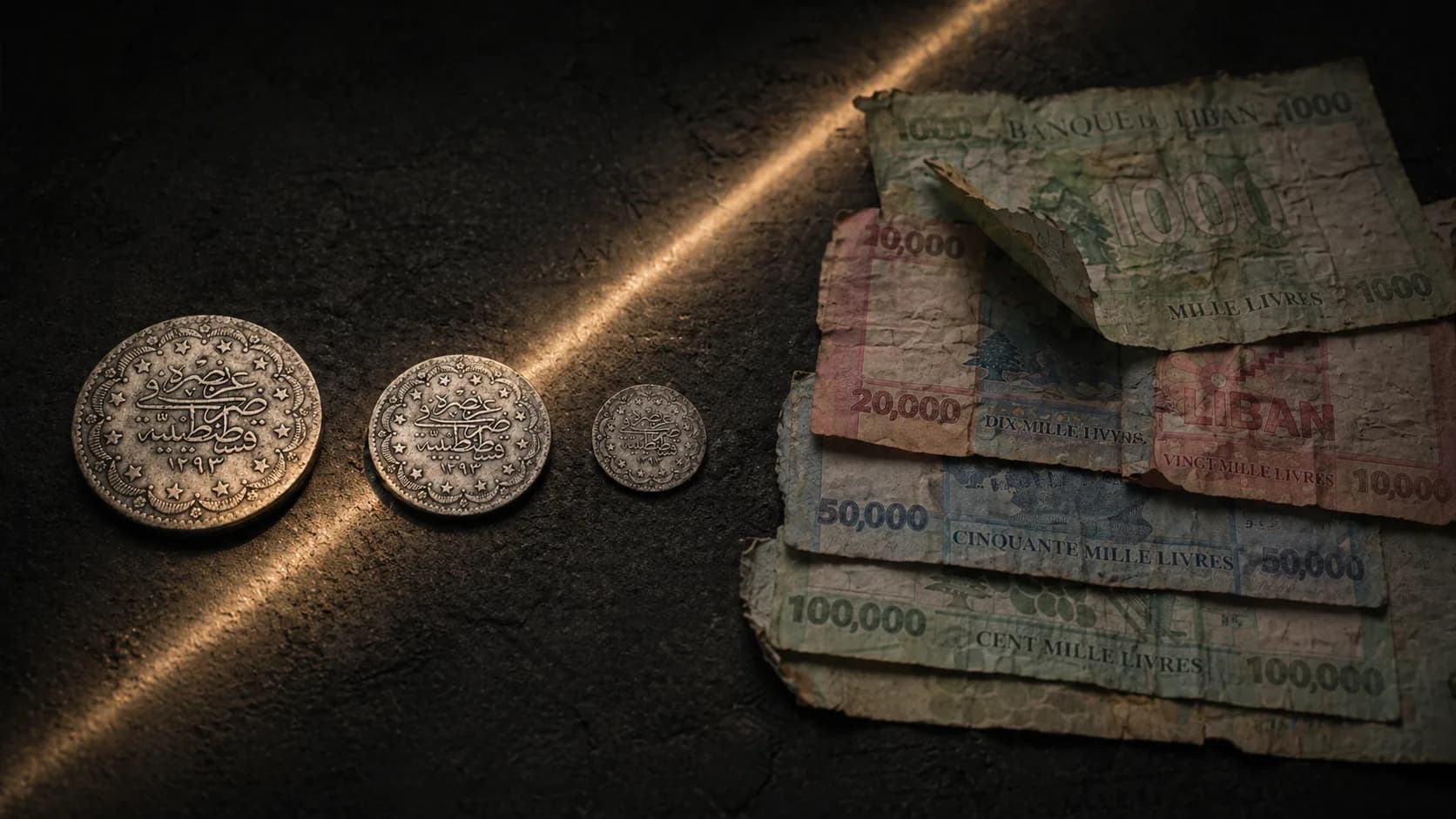
If you held a silver kuruş in 1800 and another one in 1844, both stamped with the same number, the second coin had less than a fifth of the silver. Same face value. Different metal. The state quietly kept the difference.
If you held a Lebanese lira in September 2019 and held the same lira in March 2023, the number on the bill didn't change. But what it could buy at the market collapsed by more than 98%. The state didn't have to touch the bills. The trust did all the work.
Both stories end the same way: the people holding the money lost purchasing power, and the institutions issuing the money bought time. The mechanisms, though, are very different — and the difference is worth understanding if you care about where your purchasing power actually lives.
The Ottoman state had to physically alter coins one mint run at a time. The later Lebanese case required no physical change at all — only the eventual divergence between the official rate and the underlying economic position.
Two Flavors of the Same Trick
Coin debasement is a physical act. You take a silver coin worth, say, one unit of account, and you reduce the silver content while keeping the face value. The coin still says “1 kuruş” but it now has half the metal it used to. Mints did this for centuries. It's how rulers paid for wars without raising taxes — they just made the same number of coins go further by stretching the metal.
Currency devaluation is what happens when a piece of paper, a bank deposit, or a digital balance loses value relative to a reference — another currency, gold, or simply the basket of goods it can buy. There's no melting required. The state can devalue by decree, by abandoning a peg, or by losing market confidence. The bills don't change. The world's willingness to accept them does.
Debasement was the dominant mechanism of the metallic era. Devaluation is the more common mechanism in the fiat era. Both, in the standard economic framing, transfer purchasing power from holders of money to issuers of money. Both tend to be more effective when the change is gradual or not yet widely understood.
The Ottoman Empire and Lebanon — separated by roughly two centuries and a continent of monetary evolution — give us textbook examples of each.
The Ottoman Great Debasement, 1808–1844
The Ottoman state had a problem familiar to every empire in decline: expenses growing faster than revenues, and not enough political will to raise taxes on the people who actually had money. Under Sultan Mahmud II, who ruled from 1808 to 1839, the mint turned to one of the oldest fiscal tools available — reducing the silver content of the coinage to stretch state revenues.
Look at what happened to a single kuruş over that period:
| Year | Coin weight | Fineness | Pure silver | Kuruş per £1 |
|---|---|---|---|---|
| 1800 | 12.6 g | 54% | 5.9 g | 8 |
| 1808 | 12.8 g | 46.5% | 5.9 g | 19 |
| 1820 | 6.41 g | 46% | 2.95 g | 35 |
| 1828 | 3.20 g | 46% | 1.47 g | 59 |
| 1832 | 2.14 g | 44% | 0.94 g | 88 |
| 1839 | 2.14 g | 44% | 0.94 g | 104 |
| 1844 | 1.2 g | 83.3% | 1.0 g | 110 |
Note: the 1844 reform reset the standard — new coins were struck at higher fineness but lower total weight, anchored to a fixed gold lira. The jump in fineness isn't a typo.
A kuruş in 1800 contained 5.9 grams of pure silver. By 1844, it contained 1.0 gram — an 83% reduction in metal content over 44 years. The face value never changed. The British pound, in those same years, went from buying 8 kuruş to buying 110 — a near 14x devaluation in international terms.
This is what debasement looks like in practice. Slow, technical, almost invisible to anyone who isn't paying attention to coin weights. The peasant collecting his wages didn't have a scale. The merchant accepting payment trusted the seal. By the time the cumulative effect was widely understood, three decades of silver had moved from circulation into the imperial treasury.
The Ottomans also experimented with paper money during this same era — the kaime, first issued in 1840 as a hand-written interest-bearing note. Initial denominations ranged from 1 to 500 kuruş, with later series stretching as high as 10,000 kuruş. They were essentially treasury IOUs that paid 12.5% interest. Within two years, market acceptance had eroded enough that one gold lira fetched 450 kaime kuruş instead of the official 100. Two devaluations running in parallel — one on the coins, one on the paper.
The 1844 coinage reform, known as tashih-i sikke, finally tried to stop the bleeding. The state introduced a new bimetallic standard: a gold lira worth 100 silver kuruş, with both coins minted to fixed weights and finenesses. The mint ratio was set at 15.09 to 1 — gold to silver — close to the international rate of the time. For a few decades, the system mostly held. The Empire moved formally to a gold-favoring standard in 1881 and stayed there until World War I.
Then the war broke everything. Between 1914 and 1918, the Ottoman government printed 161 million liras in new kaime to fund the war effort, with 158 million still in circulation by the armistice. Consumer prices in Istanbul rose 18-fold. Gold prices climbed 500%. By 1918, one gold lira commanded 500 kuruş in paper kaime. Estimates suggest 30 million gold liras — roughly half the total minted between 1844 and 1914 — had been pulled out of circulation and hoarded by 1918.
People knew what was happening. They voted with their hands.
The Lebanese Devaluation, 2019–today
Skip forward 100 years. Different mechanism, same outcome — but compressed into a much shorter window.
Lebanon's 15-year civil war ran from 1975 to 1990, ending with the Taif Agreement (signed 1989, militarily enforced October 1990). The currency had collapsed during the war as well, but in 1997, the Banque du Liban (BdL) formalized a hard peg of 1,507.5 lira to the US dollar. For the next 22 years, that number didn't move. It was the central premise of the entire Lebanese financial system — depositors believed it, banks built balance sheets around it, and the central bank defended it through what later became known as “financial engineering.”
Underneath the peg, the math didn't work. Lebanon ran chronic trade deficits funded by remittances and dollar inflows from the diaspora, tourism, and a banking sector that paid eye-watering interest rates to attract foreign deposits. Those deposits got recycled into government debt. By the late 2010s, roughly two-thirds of bank assets were exposures to the government and the central bank. International institutions including the IMF and the World Bank, as well as multiple credit-rating agencies, later described the arrangement as Ponzi-like in its dependence on continuous new inflows to service prior obligations. As long as new dollars kept flowing in, older depositors continued to be paid.
By 2016, net dollar inflows had begun to slow, and BdL launched its first round of “financial engineering” swaps to plug the gap. The cracks were forming. By late 2018, some banks were quietly imposing fees on dollar withdrawals. By August 2019, the black-market lira rate had begun diverging from the official 1,507.5.
Then came October 17, 2019.
The proximate trigger was almost trivial — a proposed tax on WhatsApp voice calls. The deeper cause, according to most economists who have studied the period, was more than two decades of accumulated structural imbalance. Hundreds of thousands of Lebanese poured into the streets in what became known as the thawra (the revolution). Banks closed for two unprecedented weeks. When they reopened, they imposed informal capital controls without a corresponding legal framework — depositors could no longer freely access their dollar accounts.
What followed:
- Late 2019: Black-market rate climbs toward 2,000 LBP/USD by year-end. Banks limit withdrawals.
- March 2020: Lebanon defaults on its sovereign Eurobonds — the first sovereign default in the country's history.
- April 2020: Black-market rate hits 3,000. BdL Circular 151 allows depositors to withdraw locked dollar accounts only in lira at a “haircut” rate.
- August 4, 2020: The Beirut port explosion. At least 218 dead, more than 7,000 injured, $4.6 billion in damage, half the city's healthcare facilities damaged or destroyed.
- March 2021: Black-market rate at 14,000.
- Early 2022: Rate breaches 30,000.
- February 2023: BdL formally devalues the official rate by approximately 90%, bringing the official rate substantially closer to the parallel market rate.
- March 2023: Rate spikes past 140,000 in a single week.
- 2025 onward: Rate stabilizes around 89,000 LBP/USD.
From 1,507 to 89,000 is a 98% destruction of the lira's value against the dollar. From peak panic at 140,000+, it's nearly 99%.
But here's the part most coverage misses. The lira losing its value was only half the story. The other half was that the dollars themselves — the ones sitting in Lebanese bank accounts — became unrecoverable. Locals coined the term “Lollars” to describe these trapped dollars: nominal USD on a bank statement, but only withdrawable as lira at unfavorable, ever-changing official rates. By 2023, $100 in a Lebanese bank account could be retrieved for the equivalent of roughly $10–15 in real purchasing power.
The shopkeeper in Beirut didn't have a Bloomberg terminal. He had a WhatsApp group. Pharmacies ran out of insulin in 2021. Parents pulled children out of private schools they could no longer afford. People who had spent decades building dollar savings watched the bank turn those savings into Lollars overnight.
By 2022, the United Nations estimated that around 80% of the population was living in multidimensional poverty. Public services were severely degraded. A small number of depositors entered bank branches armed and demanded access to their own blocked accounts; in August 2022, one widely reported incident involved a depositor at a Beirut branch seeking funds to cover a family member's medical bills, an episode that drew significant public sympathy and was extensively covered in international media. The events are reported here as historical record and not as endorsement of any particular response.
This is what currency devaluation looks like when it's allowed to fully unspool. No coins were melted. No silver was extracted. The numbers in the bank accounts didn't change. Trust evaporated, the peg broke, and the value followed.
The Difference, the Similarity, and What It Means
The Ottoman case took 44 years to play out. The Lebanese case took roughly 4. The Ottoman case required physical changes to the coinage one mint run at a time. The Lebanese case required no physical change — the official exchange rate simply held in name long after it had ceased to reflect underlying conditions.
The mechanisms are different. The economic outcome — a transfer of purchasing power from holders of money to issuers of money — is, according to standard monetary economics, the same.
There's another similarity worth dwelling on. In both stories, people who had moved their wealth into something the state couldn't print or melt did meaningfully better than those who hadn't. Ottoman subjects pulled gold liras out of circulation by the millions during the WWI kaime collapse. Lebanese who held physical gold, or held dollars in cash outside the banking system, kept their purchasing power. Lebanese who trusted the banks — even the ones who held dollar accounts — got Lollars.
The common thread isn't really gold versus paper, or coin versus deposit. It's something more basic: what you actually hold versus what someone else has promised you.
A silver coin in your pocket is what it is. The state can issue a new lighter coin tomorrow, but the older one in your hand keeps its silver. You'd have to hand it over for the debasement to reach you.
A bank deposit denominated in any currency — dollars, lira, anything — is a promise. The bank promises to give you back your money. The state promises to honor the currency's value. When either promise breaks, the number on your statement is just a number.
The Ottoman peasant who buried gold liras in 1914 didn't make that decision because he read economics. He made it because he could feel which way the wind was blowing. The Lebanese diaspora who pulled their savings out in 2018 — before the queues started — didn't have a crystal ball either. They had pattern recognition.
History rhymes. The instruments evolve. The dynamics don't.
What This Means for Stackers in 2026
None of this is a prediction. Lebanon is not the United States. The Ottoman Empire is not the Eurozone. The specific numbers don't map.
But the dynamics do, and the dynamics are what matter. Every currency in the world today is fiat. Every bank deposit is a promise. Every peg, every reserve composition, every monetary policy framework rests on confidence that can shift slowly for decades and then very fast for months.
The stackers who held physical gold through the Ottoman kaime collapse and through the Lebanese banking crisis didn't outperform on a spreadsheet. They opted out of a specific kind of risk — the risk that the unit of account itself stops meaning what it's supposed to mean. That's the only thing physical metal really protects against, and it's also the thing nothing else protects against quite as cleanly.
You don't need to predict the next collapse to act on this. You just need to notice that it's happened many times, recently, in places with banking systems that looked stable until they didn't.
Related reading: The Tunnel You're Already Running Through — on inflation, retirement, and what happens when the unit of account quietly erodes over decades.
Track What You Actually Hold
BullionCoin Network is built for stackers who think about this kind of thing — people who track premiums, follow central bank flows, and pay attention to which way trust is moving. Log every coin and bar you own, watch your real position in grams and dollars, and know exactly where your purchasing power lives.
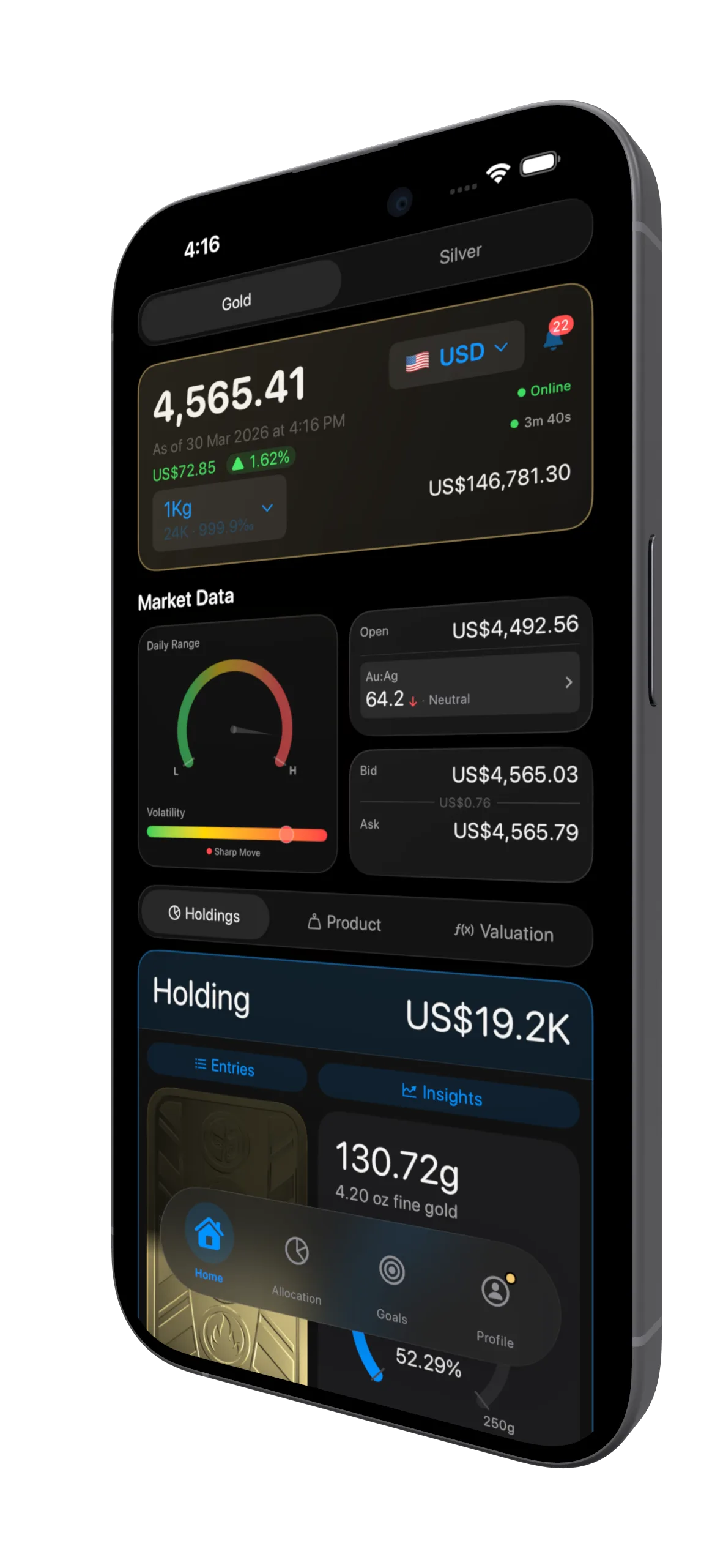
Portfolio Overview
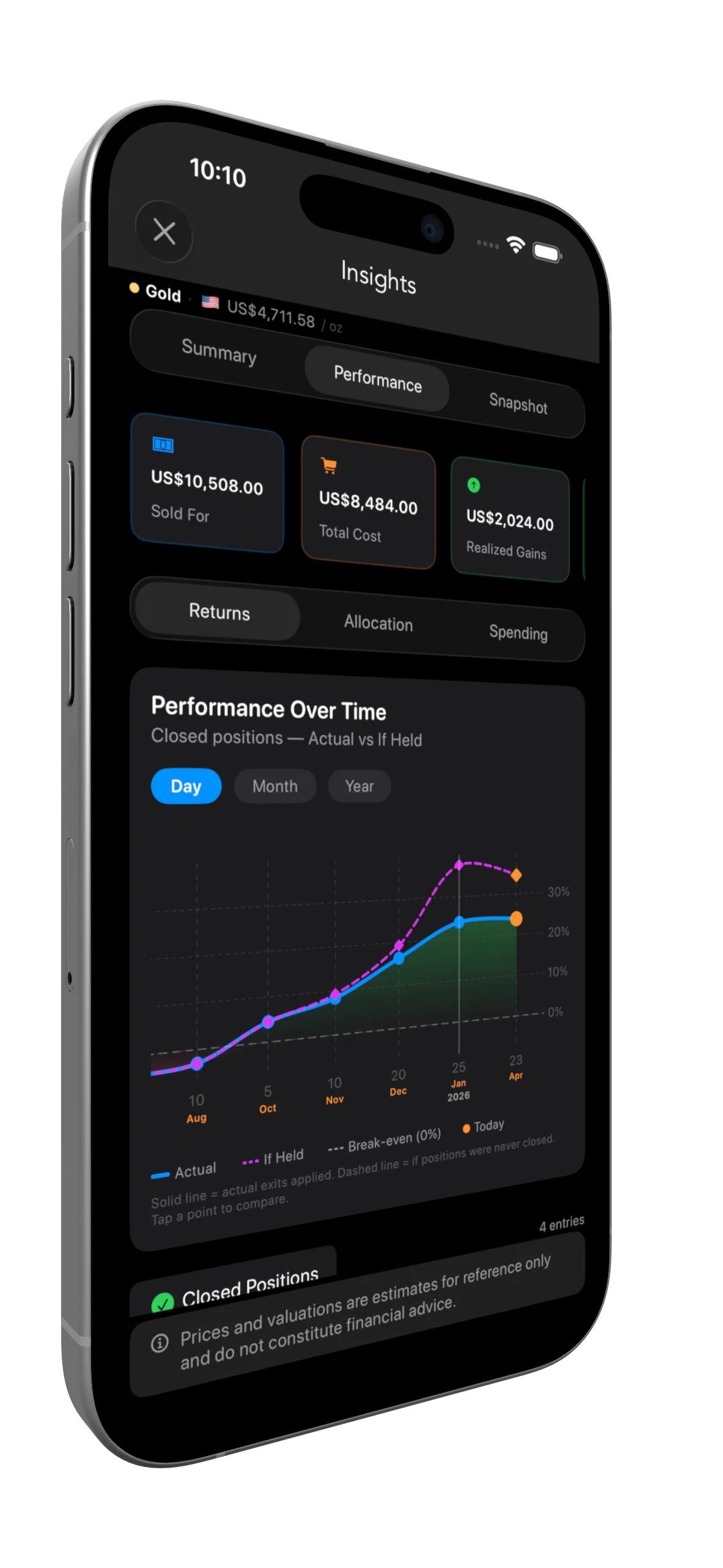
Portfolio Performance
On neutrality and accuracy: This article discusses historical monetary events involving sovereign states, central banks, and commercial banking systems that are no longer in their original form (in the Ottoman case) or that remain the subject of ongoing public reporting and policy debate (in the Lebanese case). It is presented as a neutral summary of widely reported facts and analyses drawn from academic and institutional sources. It is not intended as an allegation, accusation, or characterization of any specific individual, official, institution, government, political party, religious community, or commercial entity. Where contemporary actors are referenced, the framing reflects the most commonly reported public-record account at the time of writing; readers seeking comprehensive context should consult the cited sources and form their own conclusions.
Sources:
- Şevket Pamuk, A Monetary History of the Ottoman Empire (Cambridge University Press)
- Ali Coşkun Tunçer, “The Ottoman Empire” in the OENB SEEMHN volume on monetary history
- “The Great Ottoman Debasement, 1808–1844” (Atatürk Institute, Boğaziçi University)
- Banque du Liban official communications and circulars
- World Gold Council central bank gold reserves data
- Contemporary reporting from Reuters, the Carnegie Endowment, and the Foundation for Defense of Democracies
- Wikipedia: Ottoman lira, Kuruş, Lebanese liquidity crisis, Lebanese Civil War
Disclaimer: This article is educational content about monetary history and personal finance. It is not financial, investment, legal, or tax advice, and it does not constitute a recommendation to buy, sell, or hold any asset, currency, or security. Historical outcomes do not guarantee future results, and the dynamics described here may not apply to any specific present-day economy. Figures, dates, and exchange rates are drawn from publicly available sources believed to be reliable at the time of writing but may differ across sources and may be revised as new information becomes available. BullionCoin Network takes no political position regarding any government, central bank, commercial bank, or public figure referenced in this article. Always do your own research and consult qualified professionals before making financial decisions.