The Tunnel You're Already Running Through
You spend decades earning. Then you need those decades to sustain you — while inflation quietly erodes what you saved.

One morning on my commute, running on fumes in every sense, I pulled into a petrol station. While the pump ticked away I stood there watching the traffic blur past — hundreds of people locked into the same conveyor belt of taillights, all racing toward their desks like the building might vanish if they arrived five minutes late.
I don't know why that particular morning was the morning, but a thought hit me sideways: every single one of those drivers — myself included — is heading toward the same place. Not the office. The day the paychecks stop. Retirement, redundancy, burnout, whatever label you give the moment when your ability to earn no longer keeps pace with your need to spend.
Most of us never slow down long enough to sit with that thought. We assume the speed itself — the career, the promotions, the growing salary — is the preparation. It isn't. Not even close.
The Problem Nobody Wants to Do Math On
Here's the part that keeps me up at night sometimes: you spend 30 to 40 years building a pile, and then that pile has to keep you alive for another 20 to 30 — while the currency it's denominated in has been quietly rotting the whole time.
That's not dramatic framing. Go look up what a dollar bought in 1995 and what it buys now. It's roughly half. Thirty years of inflation doing what it always does — slowly, boringly, and without asking permission. The number in your account stays the same. What it can actually buy does not.
I'm not making a case against any particular savings vehicle here. Stocks, property, bonds — they all have their place. But they do share something that's easy to forget when everything's working fine: they're all numbers on a screen, inside systems, dependent on institutions and platforms and counterparties all functioning exactly as promised, decades from now. That's a lot of trust to hand out.
What Physical Assets Do Differently
A gold coin sitting in a safe doesn't need a server to exist. It doesn't need a brokerage to remain solvent. It doesn't need anyone to honor a promise they made before you were born. It's just there. And if the power goes out, the exchange freezes, or some bank you've never heard of fails a stress test — it's still just there.
I'm not going to pretend gold always beats the stock market. Some decades it does, some it doesn't, and anyone telling you otherwise is selling something. The point is different. When you hold physical metal, you hold the asset. Not a claim on it. Not a derivative of it. Not a line item on someone else's balance sheet. The thing itself. There's no middleman who can freeze it, unilaterally change the terms, or go bankrupt and take your position with them.
If you're thinking in 20 or 30 year terms — and retirement planning is nothing if not that — this matters more than most people give it credit for. Not because the whole system is going to collapse next Tuesday. But because over the span of three decades, something always breaks. Banks merge and your account gets “migrated.” Platforms shut down. Regulations change. Currencies get restructured. The question isn't whether disruptions happen. It's whether anything you own sits completely outside those systems when they do.
Consistency Over Conviction
The people who end up with meaningful metal at retirement aren't the ones who made one dramatic buy after a scary headline about inflation. They're the ones who bought a little, regularly, for years — often without any particular conviction about where the price was going next week.
That's the boring part nobody writes breathless articles about. You don't need to time a bottom. You don't need to “catch the dip.” You just need to keep showing up. A fixed dollar amount, every month, and the math handles itself — you automatically get more grams when the price is low and fewer when it's high. Your average cost basis trends down over time without you doing anything clever at all.
I ran the numbers once on a hundred dollars a month into gold over the previous decade. The accumulated metal was worth meaningfully more than what was paid in — not because of any brilliant entry points, but because consistency and dollar-cost averaging are quietly powerful over long stretches. Nothing flashy. Just a habit that compounds.
We published a 10-year DCA backtest that walks through exactly how this works with real data — if you want to see the numbers behind the principle.
The Finish Line Isn't Optional
I merged back into traffic that morning and watched everyone accelerate, myself included. Same tunnel. Same direction. Same destination at the end.
The only real difference between showing up prepared and showing up empty-handed is what you did during the drive. Nobody's asking you to pull over or take some alternate route. The suggestion is much smaller: while you're doing everything you're already doing, put something aside that doesn't depend on any of it continuing. Something you can hold in your hand. Something that was valuable long before your bank existed and will be valuable long after your trading app gets acqui-hired into oblivion.
The tunnel ends for everyone. What you're carrying when you step out is the only part that's actually up to you.
Start Building. Track Everything.
BullionCoin Network helps you log every purchase, track your average cost per gram, and measure your stack against live spot prices — so you always know where you stand.
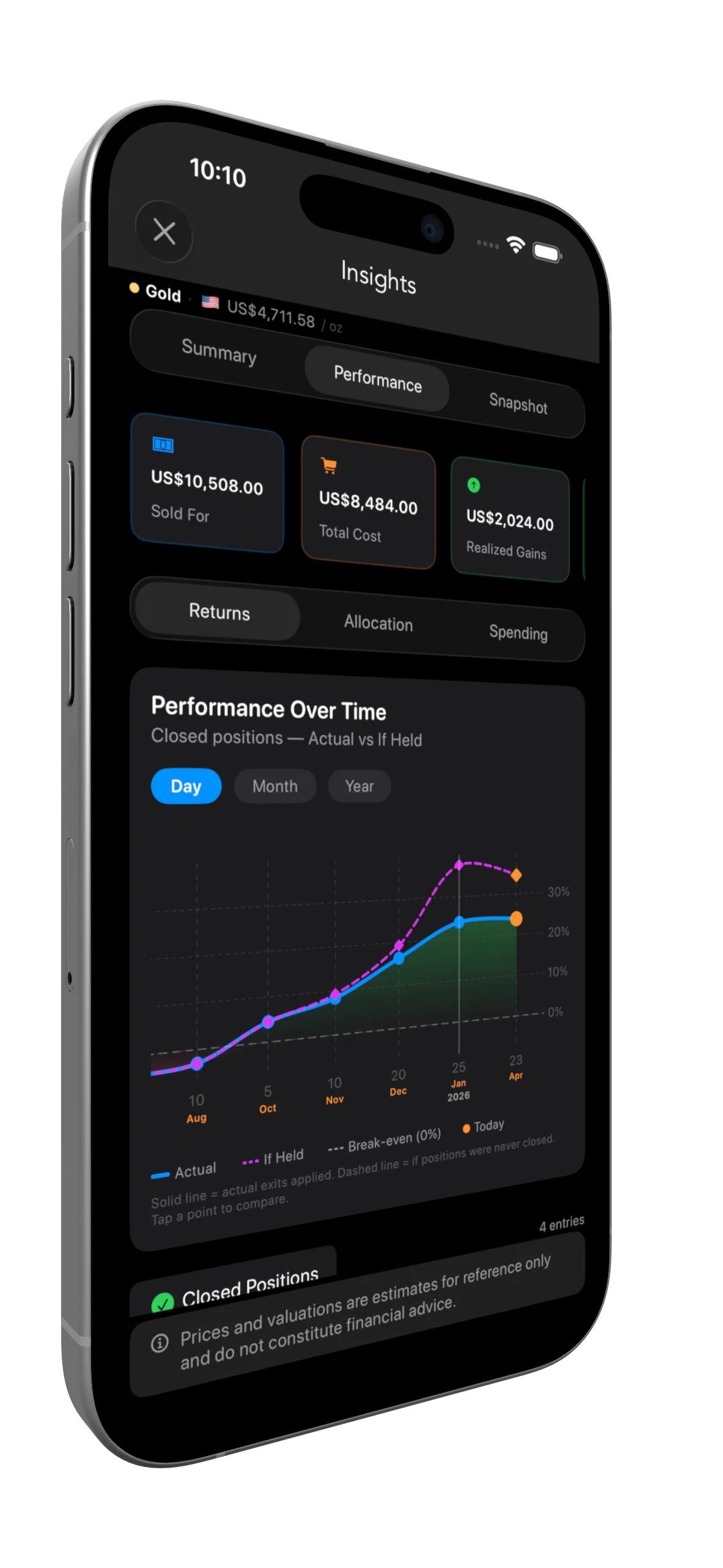
Portfolio Performance
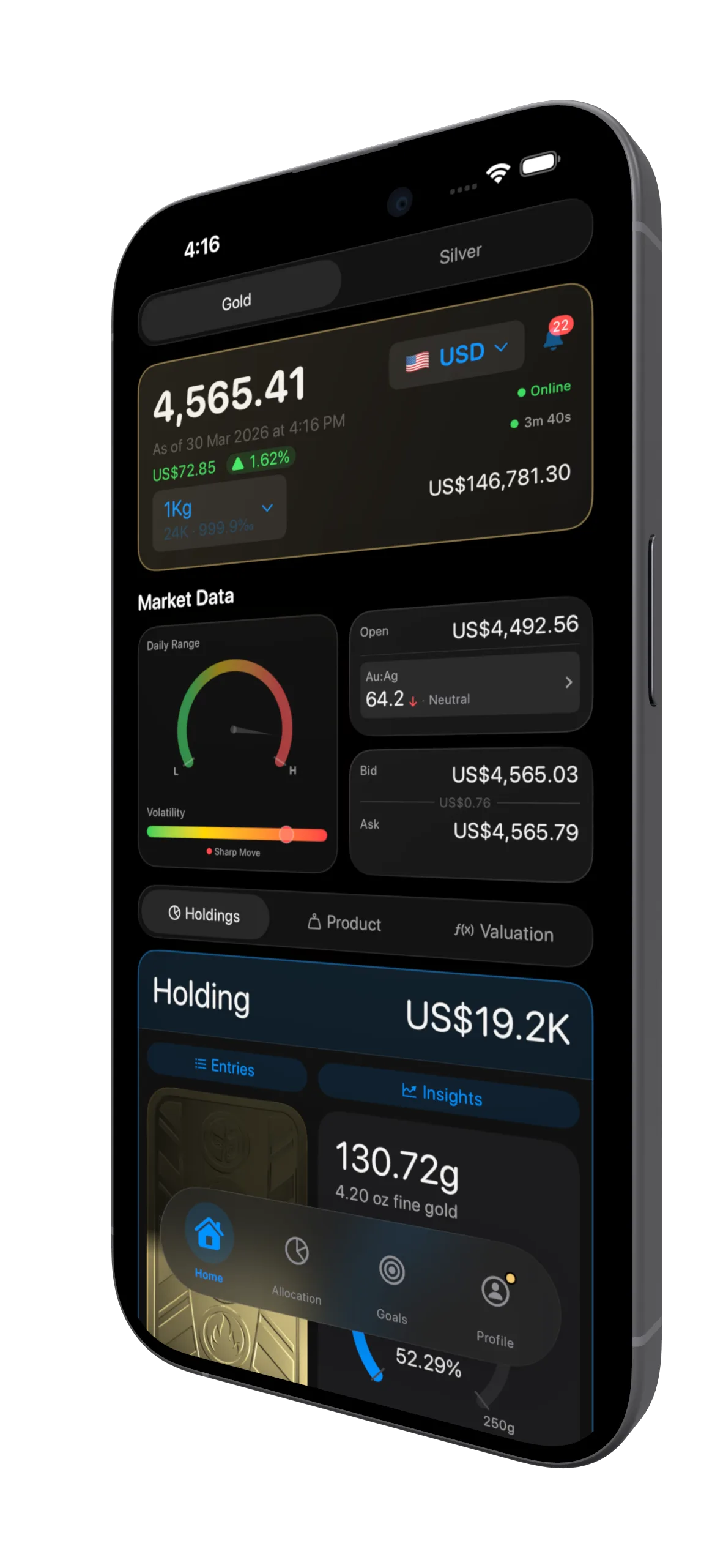
Live Spot Prices
The DCA example references findings from our 10-year gold DCA backtest, which compares fixed-dollar vs. fixed-gram buying strategies using real monthly LBMA spot data from 2015–2025.
Spot prices referenced in this post exclude dealer premiums, taxes, and storage costs. Past performance does not guarantee future results. This is educational content, not financial, investment, or tax advice. The information presented reflects historical data and the author's interpretation — it is not a recommendation to buy, sell, or hold any asset.
Always do your own research and consult a qualified financial professional before making decisions about your money.