Fixed Dollar vs. Fixed Gram: A 10-Year Gold DCA Backtest
What happens when you invest $100/month into gold versus buying 1 gram/month regardless of price? Here's 121 months of real data.

Dollar-cost averaging (DCA) is one of the simplest strategies in investing: put a fixed dollar amount into an asset on a regular schedule, regardless of price. For precious metals stackers, the question comes up often — should you spend a fixed dollar amount each month, or buy a fixed weight (say, 1 gram)?
We ran both strategies against 10 years of real monthly gold prices (March 2015 to March 2025, 121 data points from LBMA spot averages) to see how they compare.
The Setup
- Strategy A (Fixed Dollar): Invest exactly $100 on the 1st of each month at spot price.
- Strategy B (Fixed Gram): Buy exactly 1 gram of gold on the 1st of each month at spot price.
- Same time period, same gold prices, same 121 months.
Fixed-dollar DCA achieved a 6.1% lower cost basis — $49.57/g vs. $52.8/g — by automatically buying more grams when prices dipped and fewer when they spiked.
Strategy A spent $12,100 over 121 months (fixed budget), while Strategy B spent only $6,389 (variable, depending on spot). The two strategies are not equal-spend — the real advantage of fixed-dollar DCA is the lower average cost per gram you achieve through price-weighted buying, not the total amount accumulated.
Portfolio Value Over Time
Grams Accumulated — The Gap Grows
Gold Spot Price / Ounce (USD)
Understanding the Comparison
An important nuance: these two strategies do not spend the same total amount. Strategy A spends a predictable $12,100 over 121 months. Strategy B's total depends on where gold traded each month — when gold was cheap (around $34/gram in late 2015), Strategy B spent far less than $100; when gold hit $96/gram in early 2025, it spent nearly $100.
The real insight is not “which accumulated more gold” (Strategy A spent more, so naturally it got more). The insight is cost efficiency: fixed-dollar DCA produces a lower average cost per gram because it mathematically over-weights cheap months and under-weights expensive ones. This is the harmonic mean advantage — a well-known property of dollar-cost averaging in any asset class.
Which Strategy Should You Choose?
Choose fixed-dollar DCA if you want a predictable monthly budget and the mathematical edge of buying more when prices are low. This is the strategy most financial literature recommends.
Choose fixed-gram buying if you have a specific weight target (e.g., “I want to own 500 grams by 2030”) and your budget can absorb the cost swings. Some stackers prefer the tangible satisfaction of adding an exact weight each month.
Either way, the most important factor is consistency. Both strategies massively outperform sporadic, emotion-driven buying.
Track Your Stack Over Time
BullionCoin Network lets you log every purchase, track your average cost per gram, and watch your portfolio value move with live spot prices — so you can see your DCA strategy play out in real time.
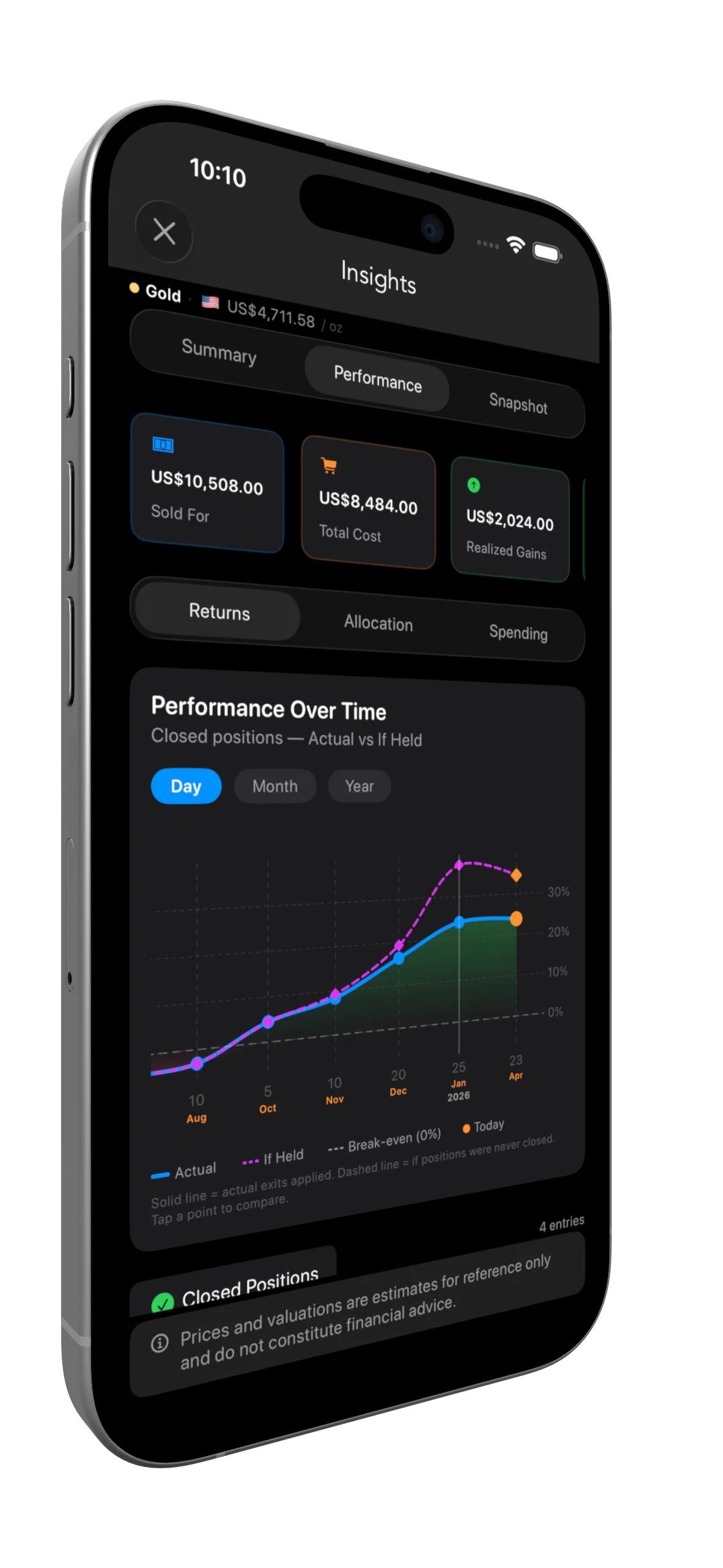
Portfolio Performance
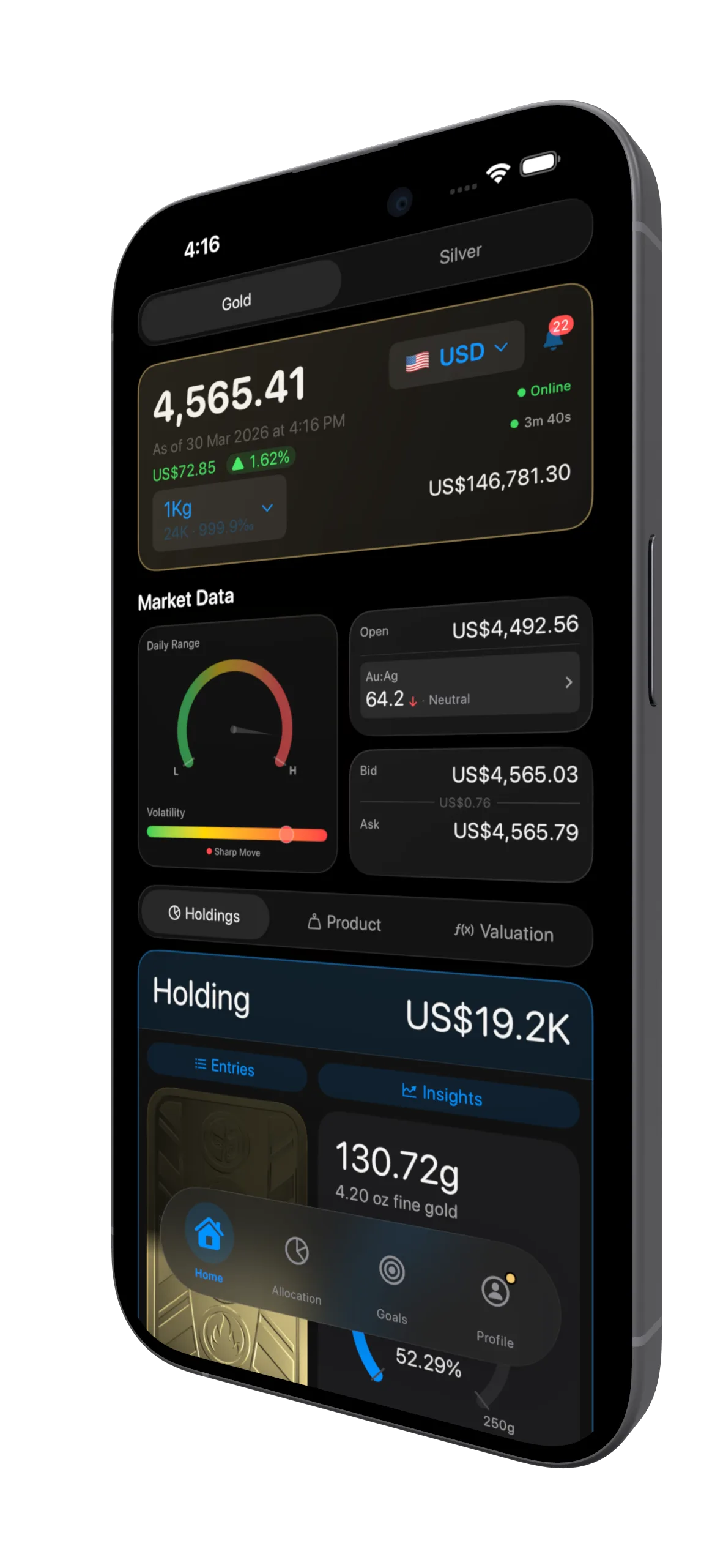
Live Spot Prices